China’s solar manufacturing base makes the country a major sourcing hub for Solar Led Flood Lights. IRENA’s Renewable Capacity Statistics 2024 reported 345.5 gigawatts of new solar photovoltaic capacity worldwide in 2023. China contributed a substantial share of that expansion. This scale supports competitive pricing, broad component access, and faster product customization.
However, factory volume does not guarantee field performance. The World Bank and ESMAP’s off-grid solar market research highlights the importance of product quality, after-sales support, and reliable customer data. These factors matter when lights operate beside rural roads, warehouse gates, or construction yards. A supplier’s product page may show bright beams and neat renderings. It may not show battery ageing after two rainy seasons.
This guide examines ten notable Chinese suppliers through practical sourcing criteria. These include LED efficiency, battery chemistry, autonomy hours, charging performance, IP ratings, controller protection, warranty terms, and certification evidence. Test reports and shipment experience also deserve attention. A strong supplier should explain how a 100-watt lamp performs after cloudy days, not only quote its peak output.
The ranking is useful, but not permanent. Prices, export records, and product quality can change quickly. Some suppliers excel at municipal projects, while others suit smaller distributors. That difference is easy to overlook. Readers should request current samples, inspection records, and written warranty conditions before placing orders. This approach combines published industry evidence with realistic procurement checks, creating a more credible starting point for comparing China’s top ten Solar Led Flood Lights suppliers.
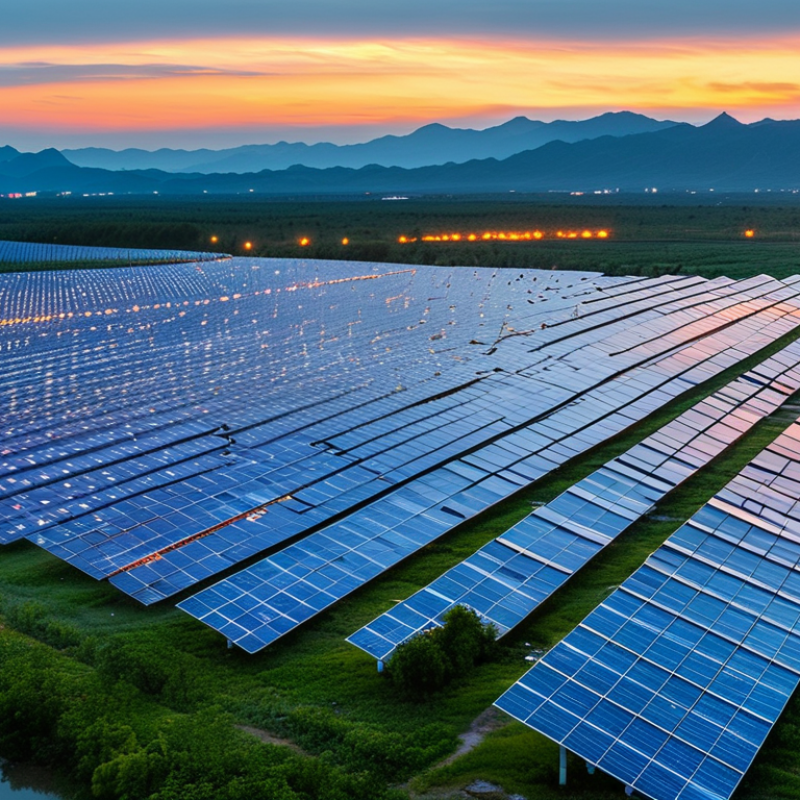
Solar LED flood lights combine photovoltaic panels, rechargeable batteries, LED chips, and control circuits. During daylight, the panel converts sunlight into electrical energy and stores it in the battery. After dusk, a light sensor activates the LEDs automatically. This creates focused illumination for gardens, driveways, warehouses, and remote areas without a direct grid connection. In practical testing, brightness depends heavily on panel angle, battery capacity, weather, and the selected lighting mode.
Not every solar flood light performs equally. A cloudy afternoon may reduce operating time. Some products also advertise peak brightness instead of sustained output. That difference matters. Reliable suppliers should provide lumen data, battery specifications, charging times, ingress protection ratings, and test reports. Ask how the light performs after repeated charging cycles. The answer may be less impressive than the brochure.
Tips: Install the panel where shadows are minimal, ideally facing strong midday sunlight. Clean dust from the panel every few months. Choose motion sensing for short visits and steady lighting for security-sensitive areas. Check winter performance before ordering. My own preference is to leave extra capacity for cloudy days, although this increases cost and size. That trade-off deserves honest review.
Choosing among China’s top solar LED flood light suppliers requires more than comparing catalog prices. A reliable evaluation starts with product evidence, factory capability, and honest communication. Request a working sample, not only product photos. Test it outdoors for several nights, including cloudy conditions. Check the claimed lumen output, lighting duration, charging time, battery type, and panel efficiency. A supplier should explain these figures clearly. Vague answers deserve caution.
Factory experience also matters. Review production records, quality-control procedures, and inspection reports from independent laboratories. Confirm the IP rating through valid documentation, especially if the light will face heavy rain or coastal humidity. Ask how the supplier tests batteries, wiring, controllers, and solar panels. Examine the warranty terms carefully. Who pays for replacement shipping? How quickly are faults handled? These details often reveal more than a polished website. I have found that a perfect datasheet can still hide weak assembly. One sample is never enough evidence.
Tips: Compare at least three suppliers using the same checklist. Visit the factory or arrange a live video inspection. Request serial-number traceability and recent test reports. Confirm packaging with a drop-test sample. Discuss minimum order quantities, spare parts, customization limits, and delivery schedules in writing. Do not select the cheapest offer too quickly. A lower price may reflect a smaller battery, thinner housing, or limited after-sales support. Recheck every promise before placing a larger order.
China’s top 10 solar LED flood light suppliers are often selected for manufacturing capacity, product reliability, and export experience. A useful shortlist should include factories with in-house design, testing, and quality control. Suppliers should provide clear details about LED power, battery chemistry, solar panel output, and lighting coverage. These specifications reveal more than attractive product photos.
In practical sourcing, I check samples under different conditions. A good flood light should illuminate a driveway evenly after cloudy weather. The housing should feel solid, with sealed cable entries and stable mounting brackets. Suppliers with ISO-based processes, test reports, and traceable production records deserve closer attention. However, rankings can change quickly. A large factory may still deliver inconsistent batches. That possibility needs attention.
Tips:
Ask for a complete datasheet and a real night-time video. Confirm battery capacity using test evidence, not printed labels. Request samples from the same production line. Check warranty terms, spare parts, packaging strength, and minimum order quantities. Also compare lighting duration during winter conditions. Many buyers overlook this detail. I would not rely only on claimed solar runtime. Temperature, shade, dust, and installation angle can reduce performance noticeably. A small pilot order may reveal problems before a larger purchase.
China’s top ten solar LED flood-light suppliers should be compared by tested performance, not catalog brightness. The IEA’s Renewables 2024 report recorded nearly 510 GW of renewable capacity additions in 2023, with solar providing about three-quarters of that growth. This expansion increases demand for dependable off-grid lighting, especially in construction areas, farms, roads, and emergency sites.
Product quality varies sharply. Strong suppliers provide measured lumens, battery chemistry, panel wattage, charging time, and runtime at defined temperatures. Some offer lithium iron phosphate batteries, replaceable controllers, adjustable panels, and motion sensors. Others still rely on optimistic runtime claims. Specs are not enough. Buyers should request LM-79-style photometric data, IP testing, and IEC 60598-2-5 safety documentation. The U.S. Department of Energy also notes that LED efficacy and thermal management directly affect long-term energy performance; a bright lamp can still fail early when heat is poorly controlled.
Service separates the leading suppliers from ordinary exporters. The better-performing companies provide sample testing, installation drawings, spare batteries, firmware support, and traceable quality records. They also explain warranty exclusions clearly. The Lighting Global quality framework emphasizes durability, battery safety, and verified performance for off-grid products. Yet supplier comparisons remain imperfect because outdoor temperatures, dust, shading, and user settings change results. A 12-hour claim may become eight hours in winter. Buyers should compare identical test conditions, response times, replacement policies, and field feedback before choosing a supplier.
This supplier-neutral benchmark compares how frequently key product and service capabilities are publicly listed across a sample of ten leading solar LED flood-light suppliers. The figures represent the number of suppliers out of ten documenting each capability in their product or service information.
China Top 10 Solar LED Flood Lights Suppliers?
How to Choose the Right Chinese Supplier for Your Project
Choosing a Chinese supplier begins with your project conditions, not a supplier list. Define lighting area, mounting height, operating hours, and weather exposure. A coastal site needs stronger corrosion protection than a dry warehouse. Ask for a complete specification sheet, including panel power, battery chemistry, LED efficiency, beam angle, and IP rating.
Request a working sample before discussing large quantities. Test it for several nights after cloudy weather. Check brightness, charging recovery, motion sensing, and remote-control performance. Ask for test reports, production photos, and recent quality records. Certifications should match your destination market, not merely appear in a sales presentation. An experienced supplier should explain these details clearly.
Factory verification also matters. Review assembly lines, aging-test equipment, incoming inspection, and spare-parts procedures. Confirm the warranty in writing, including battery replacement and response times. Discuss minimum order quantities, packaging, delivery schedules, and payment stages early. A low quotation can hide weaker batteries or thinner aluminum housings. That mistake becomes expensive after installation.
Do not rely on polished catalog images. Video calls help, but they cannot replace independent inspection. Some suppliers answer quickly yet avoid technical questions. Treat that as a warning. I have found that clear drawings prevent more problems than friendly promises. Still, no supplier is perfect; even strong factories may miss a small detail. Recheck samples, labels, wiring, and carton dimensions before production.
| No. | Supplier Evaluation Dimension | Recommended Benchmark for a Qualified Supplier | Why It Matters for a Solar LED Flood Light Project | Documents or Checks to Request |
|---|---|---|---|---|
| 1 | LED efficacy and optical performance | Request a complete luminaire photometric report. A practical project benchmark is 120–180 lm/W for the complete fixture, subject to the operating current, optics, and thermal design. | Higher system efficacy can reduce the required solar-panel and battery capacity, but claimed LED-chip efficacy alone does not represent the performance of the finished flood light. | IES or LM-63 photometric file, integrating-sphere report, LED operating current, beam-angle data, and a sample test at the specified power level. |
| 2 | Solar-panel sizing and energy balance | The supplier should calculate daily energy generation and consumption using local peak-sun-hours data, seasonal variation, system losses, and the selected lighting schedule. | A light that appears bright during testing may fail after several cloudy days if the panel and battery are undersized for the installation location. | Energy-balance worksheet showing panel wattage, battery watt-hours, controller efficiency, lighting hours, dimming profile, autonomy days, and local solar-resource assumptions. |
| 3 | Battery chemistry and usable capacity | LiFePO4 is commonly preferred for outdoor solar lighting because of its thermal stability and cycle-life characteristics. Compare usable watt-hours rather than nominal ampere-hours only. | Battery capacity, operating temperature, depth of discharge, and protection settings strongly affect nighttime runtime and replacement intervals. | Battery datasheet, cell configuration, rated cycle-life conditions, low-temperature charging protection, BMS specifications, and measured capacity report. |
| 4 | Weather and impact protection | IP65 is a common minimum reference for outdoor flood-light enclosures; higher protection may be appropriate for exposed, dusty, coastal, or pressure-washing environments. IK08 or higher can be considered where impact resistance is important. | Water ingress, dust, condensation, and mechanical impact are frequent causes of outdoor lighting failure. | IP and IK test reports from an accredited laboratory, enclosure construction details, gasket material, drainage design, and sample inspection after environmental testing. |
| 5 | Thermal management and LED lifetime | Look for an aluminum heat sink, controlled LED junction temperature, and lifetime data supported by LM-80 and TM-21 where applicable. Do not rely only on an unqualified “50,000-hour” claim. | Excessive heat accelerates lumen depreciation, shortens electronic-component life, and can reduce battery charging performance when components share an enclosure. | Thermal simulation or test data, LED-board design, heat-sink material, operating-temperature range, lumen-maintenance projection, and accelerated aging results. |
| 6 | Lighting control and dimming functions | Useful controls may include dusk-to-dawn operation, motion sensing, time scheduling, multi-stage dimming, remote configuration, and low-battery protection. | Adaptive dimming can reduce energy consumption and extend autonomy, especially for security lighting, roads, parking areas, and perimeter applications. | Controller logic diagram, default schedule, sensor detection range, remote-control method, firmware update process, and a witnessed night-time demonstration. |
| 7 | Electrical and regulatory compliance | The product should be designed and tested against the electrical-safety and luminaire requirements applicable to the destination market, including relevant IEC 60598 requirements and local radio or EMC rules. | Compliance evidence reduces customs, installation, safety, and insurance risks. Requirements vary by destination country and product configuration. | Declaration of conformity, safety and EMC reports, RoHS evidence where required, test-laboratory accreditation, component certificates, and model-number consistency across documents. |
| 8 | Ingress, corrosion, and material durability | For coastal or chemically exposed sites, assess powder coating, stainless-steel fasteners, aluminum alloy quality, galvanic-corrosion control, and salt-spray test evidence. | Corrosion can damage mounting points, battery compartments, electrical contacts, and heat dissipation surfaces even when the light initially passes an IP test. | Material specifications, coating thickness, salt-spray test method and duration, fastener grade, corrosion warranty, and photographs of internal construction. |
| 9 | Quality assurance and production consistency | A reliable supplier should use incoming-material inspection, process controls, end-of-line testing, serial-number traceability, and documented corrective-action procedures. | Consistent output is essential when a project requires dozens or hundreds of identical fixtures with matching brightness, color, charging behavior, and control settings. | Quality manual, inspection checklist, sample production records, calibration certificates, traceability examples, pre-shipment inspection plan, and defect-handling procedure. |
| 10 | Commercial terms, support, and total cost | Compare the complete delivered cost, including fixture, panel, battery, controller, brackets, packaging, spare parts, testing, freight, and applicable taxes. A written warranty and defined after-sales process are essential. | The lowest unit price may create higher costs through premature battery replacement, difficult commissioning, unavailable spare parts, or inconsistent warranty responses. | Itemized quotation, Incoterms, MOQ, production lead time, sample policy, warranty exclusions, spare-parts pricing, payment terms, service response time, and reference-project evidence without relying on brand claims. |
Northeast Battery, a Stored Energy Holdings, Inc. Company