How to Choose a PVC Profile Mixer for Your Factory?
Choosing a Pvc Profile Mixer is a practical decision that affects blending quality, production stability, energy use, and maintenance costs. A suitable machine should match your PVC formulation, output target, factory layout, and operator experience. A mixer that performs well in one plant may create uneven blending in another. Small differences matter.
Dr. George Wypych, a recognized PVC processing author, has stated, “PVC formulation is a system, not a single ingredient.” This principle should guide your equipment selection. Calcium carbonate levels, stabilizers, pigments, impact modifiers, and processing temperatures can change the mixer’s workload. Check the hot-mixing temperature, cooling efficiency, rotor design, vessel capacity, and discharge method. Ask the supplier for test data using your actual materials. Brochures are not enough.
Look closely at daily operation. Can operators clean the vessel without unsafe access? Are temperature sensors positioned correctly? Does the cooling stage remove heat quickly after hot mixing? A reliable Pvc Profile Mixer should produce consistent batches, not merely impressive laboratory samples. Review motor power, wear-part availability, warranty terms, and after-sales support. Speak with existing users if possible.
Some choices remain uncertain. A larger mixer is not always better. Higher speed may improve dispersion, but it can also raise heat and increase wear. Your team should record batch temperature, mixing time, power consumption, and defect rates before deciding. That evidence may challenge your first assumption. Good equipment selection is less about buying the most powerful machine and more about fitting the complete process.
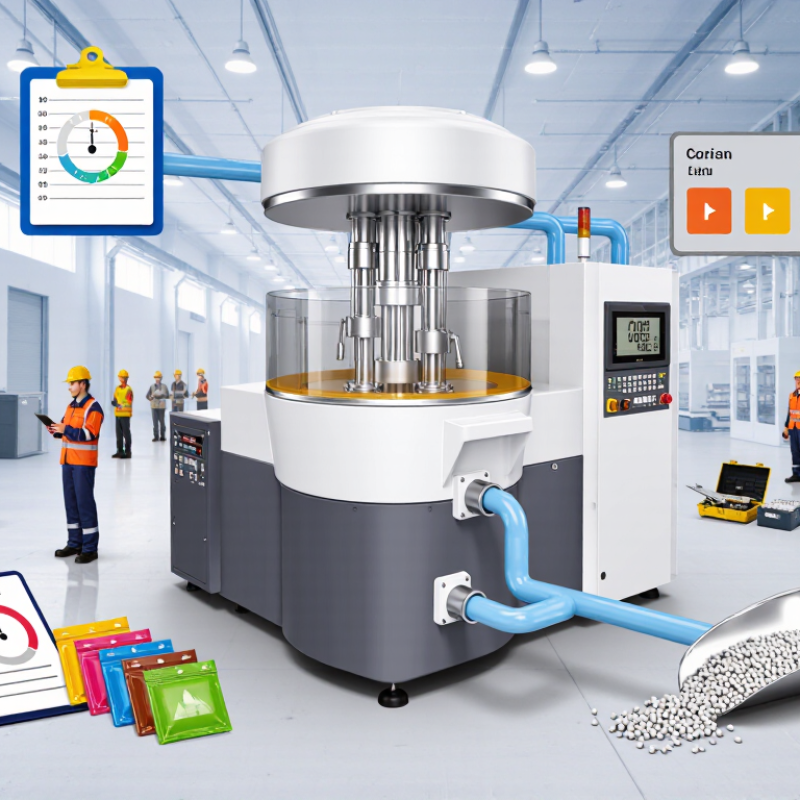
Understanding PVC Profile Mixer Types and Processing Requirements
How to Choose a PVC Profile Mixer for Your Factory?
Choosing a PVC profile mixer starts with understanding the material process, not the machine appearance. Rigid PVC compounds usually need controlled heating, uniform dispersion, and rapid cooling. A hot and cold mixer system is common for this work. The hot mixer blends resin, stabilizers, fillers, and processing aids under controlled friction. The cold mixer then lowers the blend temperature before storage or extrusion.
The mixer type should match your formulation and production rhythm. A vertical mixer can suit limited floor space and smaller batches. A horizontal mixer may offer easier loading and more consistent high-volume handling. For profiles with heavy calcium carbonate content, check the motor torque and paddle strength carefully. Too little mixing energy can leave pale streaks or weak sections. Excessive heat can damage stabilizers and create unwanted discoloration.
Pay attention to temperature sensors, discharge design, cleaning access, and dust control. In daily factory use, small details matter. A difficult outlet wastes material. Poor cooling can cause the blend to bridge inside the hopper. Ask for actual test data using your resin, filler ratio, and target output. Laboratory figures may not reflect continuous production. I have seen suitable machines perform poorly after formulas changed slightly. Therefore, leave room for future capacity, but avoid buying excessive power without evidence. The best choice may still require adjustment after several production trials.
Matching Mixer Capacity to Your Factory’s Production Scale
How to Choose a PVC Profile Mixer for Your Factory?
Mixer capacity should match your factory’s real production scale, not an optimistic target. Start with hourly output, batch weight, and mixing cycles per hour. For example, a 300-kilogram batch running four cycles hourly may produce 1,200 kilograms per hour before downtime. Actual output will be lower. Operators need time for loading, discharge, cleaning, and temperature checks. Measure these delays during a normal production week. Do not rely only on supplier calculations.
PVC profile production also depends on powder bulk density, additive ratios, and the required mixing temperature. A mixer filled too heavily may create uneven heat distribution. An oversized unit can waste energy and increase waiting time between batches. An undersized unit may force continuous operation, leaving no room for maintenance. Production changes, too. Seasonal orders can make today’s ideal capacity unsuitable next year. My first estimates have often been too generous. A conservative calculation is safer.
Tips: Keep the working load below the mixer’s maximum rated volume. Compare expected output with your slowest processing stage. Leave practical capacity for maintenance and rejected batches. Test a sample formulation before final selection. Record cycle times with real operators, since actual handling rarely matches a spreadsheet. Review the figures after several weeks, not after one successful trial.
How to Choose a PVC Profile Mixer for Your Factory? - Matching Mixer Capacity to Your Factory’s Production Scale
| Factory Production Scale | Typical PVC Profile Output | Recommended Mixer Configuration | Hot Mixer Capacity | Cooler Capacity | Typical Batch Size | Approx. Installed Motor Range | Best Application |
| Pilot or Small Workshop | 50–150 kg per hour | Small hot-and-cool mixer set | 50–150 L gross volume | 100–300 L gross volume | 25–75 kg per batch | 15–45 kW total | Product trials, limited orders, and multiple formulations |
| Small Commercial Factory | 150–350 kg per hour | Standard batch mixing line | 200–500 L gross volume | 400–1,000 L gross volume | 100–250 kg per batch | 45–90 kW total | One or two extrusion lines with regular daily production |
| Medium-Scale Factory | 350–700 kg per hour | Medium high-speed hot-and-cool mixer | 500–800 L gross volume | 1,000–1,600 L gross volume | 250–400 kg per batch | 90–160 kW total | Several profile extrusion lines and consistent product demand |
| Large Commercial Factory | 700–1,200 kg per hour | Large automated mixing system | 800–1,200 L gross volume | 1,600–2,400 L gross volume | 400–600 kg per batch | 160–280 kW total | High-utilization plants with automated material handling |
| High-Volume Production Site | 1,200–2,000+ kg per hour | Multiple mixer sets or continuous-feed preparation system | 1,200–2,000 L gross volume per mixer | 2,400–4,000 L gross volume per cooler | 600–1,000 kg per batch | 280–500+ kW total | Multiple extrusion lines, centralized batching, and 24-hour production planning |
Capacity planning notes: - The listed output figures are practical planning ranges for PVC dry-blend preparation and can vary with formulation, bulk density, moisture content, heating method, discharge time, and operating cycle.
- A typical batch should not fill the mixer to its full geometric volume. The usable working volume is commonly lower to allow effective circulation and uniform mixing.
- Choose a mixer that can meet current demand while leaving approximately 15–25% capacity for production growth, formulation changes, and efficiency losses.
- The cooler should normally provide greater gross volume than the hot mixer because the blend expands during cooling and requires sufficient residence time before extrusion.
Evaluating Mixing Performance, Materials, and Temperature Control
How to Choose a PVC Profile Mixer for Your Factory?
Mixing performance should be judged under real production conditions, not only from catalog figures. Check batch uniformity, discharge time, torque stability, and powder buildup after repeated cycles. A good mixer distributes stabilizers, pigments, fillers, and processing aids without creating hot spots. Inspect samples from the top, middle, and bottom of the batch. Small differences can later become surface streaks or weak profile sections. Record results across several batches. One trial is not enough.
Material compatibility deserves equal attention. Stainless steel contact surfaces can resist corrosion and simplify cleaning, while the internal design must handle abrasive fillers. Consider bulk density, moisture, particle size, and formulation changes before selecting the chamber and blades. A mixer that handles rigid PVC may perform poorly with heavily filled compounds. Ask for material-specific test data. Generic claims are weak evidence.
Temperature control protects both quality and productivity. Use reliable sensors near the product zone, not only on the outer jacket. Review heating and cooling response, temperature uniformity, and alarm accuracy. PVC can suffer from premature fusion when heat rises too quickly. Cooling must also remove frictional heat before discharge. Keep a clear trend record for each batch. A perfect laboratory result may still fail during summer production. I would leave room for adjustment, because factory conditions rarely stay perfectly stable.
Comparing Suppliers, Costs, Installation Support, and Long-Term Value
How to Choose a PVC Profile Mixer for Your Factory?
Choosing a PVC profile mixer requires more than comparing purchase prices. In factory evaluations, I check mixing capacity, heating control, discharge speed, and batch consistency. A mixer that produces uneven blends can create visible profile defects and costly material waste. Request test results using your actual PVC formulation. Ask suppliers about motor efficiency, blade wear, spare parts, and typical service response times. Supplier references from similar factories are valuable evidence.
Installation support can affect production more than expected. Confirm whether technicians will level the equipment, connect controls, test safety functions, and train operators. Good support should include recipe adjustment and trial-batch monitoring. Ask for clear manuals and remote troubleshooting procedures. Small gaps matter. A delayed replacement sensor can stop an entire production line.
Compare total cost over several years, not only the quotation. Include electricity use, cleaning time, maintenance labor, tooling replacement, and possible downtime. A lower-priced mixer may need frequent repairs or longer mixing cycles. That assumption can be wrong. A more expensive unit may offer better control, but only if its performance matches your materials and output targets. Before deciding, calculate cost per usable batch and inspect the supplier’s warranty terms. Reliable long-term value comes from measurable output, practical support, and equipment that operators can maintain without constant outside help.