
We can help!
800-441-8824

How to Choose the Best Deep Cycle Battery?
Choosing the best deep cycle battery starts with understanding how your equipment uses stored power. A fishing boat, solar backup system, mobility device, and work trailer may require very different battery designs. The right choice depends on load size, daily runtime, charging method, temperature, available space, and maintenance expectations. A battery that performs well in a small cabin may disappoint in a heavily used camper.
Start with real measurements, not guesses. Record the device’s wattage, expected operating hours, and charging pattern. For example, a 100-watt refrigerator running for eight hours needs more capacity than its label may suggest because compressors cycle unevenly. This is where battery deep cycle performance matters. These batteries are built for repeated discharge and recharge, but they still suffer when regularly drained too far. Check the manufacturer’s recommended depth of discharge, cycle-life testing, terminal design, and warranty conditions.
Lead-acid batteries remain practical for lower budgets, while lithium batteries usually offer lighter weight, faster charging, and greater usable capacity. Neither option is perfect. Lithium may need a compatible charger and battery management system. Lead-acid units can be heavy and require ventilation or maintenance, depending on their design. I have seen buyers focus on amp-hour ratings alone, then discover that cold temperatures, inverter losses, or poor cables reduce actual performance. That mistake is easy to repeat.
A reliable decision compares total ownership cost, not only the purchase price. Confirm installation requirements and charging compatibility before ordering. The best battery is the one that safely matches your equipment, usage habits, and operating environment. Test the plan on paper first.
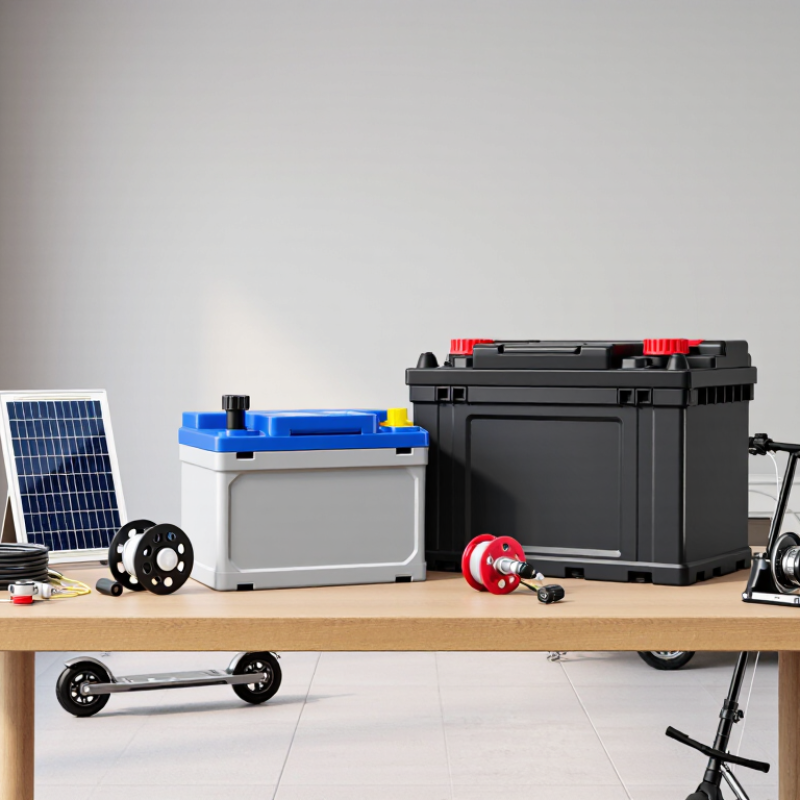
Table of Contents
[Hide]
Understanding Deep Cycle Battery Types and Their Key Differences
Deep-cycle batteries are designed to deliver steady power over extended periods, but their chemistry changes how they behave. Flooded lead-acid batteries are usually less expensive upfront and tolerate regular cycling when properly maintained. They need ventilation, upright installation, and periodic electrolyte checks. AGM batteries are sealed and resist vibration, making them practical in enclosed or mobile setups. Gel batteries are also sealed, but charging voltage must be carefully controlled. Lithium iron phosphate batteries are lighter and can often provide more usable capacity per cycle, though their purchase price is higher. A few details matter.
The National Renewable Energy Laboratory’s 2024 Annual Technology Baseline models lithium-ion storage at roughly 85% round-trip efficiency and lead-acid storage at about 80%. These are modeled system estimates, not guarantees for every battery or installation. Actual results depend on temperature, charge rate, inverter losses, and maintenance. Compare usable energy, not just the amp-hour figure printed on a label. For example, a 100 Ah lead-acid battery may be best kept near half discharge for routine use, while some lithium batteries allow deeper discharge within their manufacturer’s limits. That difference can change the size and cost of a cabin or boat setup. I would still check the charging profile before choosing; that step is easy to overlook.
How to Choose the Best Deep Cycle Battery? — Understanding Deep Cycle Battery Types and Their Key Differences
| Battery Type | Typical Nominal Voltage | Practical Usable Capacity | Typical Cycle Life* | Maintenance | Key Advantages | Main Considerations | Often Suited To |
|---|---|---|---|---|---|---|---|
| Flooded lead-acid | 12 V, 6 V, or 2 V cells | About 50% of rated capacity for routine use | Roughly 300–700 cycles at about 50% depth of discharge | Periodic electrolyte-level checks and ventilation are generally required | Low upfront cost; widely available; established technology | Heavy; can release gas while charging; performance and life decline with deep or prolonged discharge | Budget-conscious installations with regular maintenance and good ventilation |
| AGM lead-acid | 12 V or 6 V | About 50% of rated capacity for routine use | Roughly 400–800 cycles at about 50% depth of discharge | Sealed, generally maintenance-free; still needs suitable charging and ventilation | Spill-resistant; lower maintenance than flooded batteries; can deliver high current | Usually costs more than flooded lead-acid; sensitive to overcharging; heavy for its capacity | Mobile or enclosed applications where a sealed battery is preferred |
| Gel lead-acid | 12 V or 2 V cells | About 50% of rated capacity for routine use | Roughly 500–1,000 cycles at about 50% depth of discharge | Sealed and generally maintenance-free | Spill-resistant; can perform well in steady, moderate-discharge service | Requires a compatible, carefully regulated charging profile; high charge rates can cause damage | Installations needing sealed construction and relatively gentle charging |
| Lithium iron phosphate (LiFePO₄) | 12.8 V nominal for a common four-cell battery; other system voltages are available | Often 80–100% of rated capacity, subject to manufacturer limits and system design | About 2,000–5,000+ cycles, depending on cell quality, depth of discharge, temperature, and charging | Low routine maintenance; an integrated battery management system is typically used | High usable capacity; low weight; good charge efficiency; generally long cycle life | Higher purchase price; needs compatible charging and low-temperature charge protection | Frequent cycling, weight-sensitive systems, and applications needing more usable capacity |
How to compare: Cycle-life figures are typical ranges, not guarantees. Actual results depend on the specific battery, depth of discharge, charge settings, temperature, storage, and maintenance. Check the manufacturer’s specifications and confirm compatibility with your charger and equipment before choosing.
Related Posts
-
2026 Best Deep Cycle Battery Types for Global Buyers
-
Top Dual Purpose Marine Battery Benefits: What You Need to Know
-

What Is the Best Dual Purpose Marine Battery from China?
-

How to Choose the Right Battery Distributor for Your Business Needs?
-
What is a Battery Group and How Does it Affect Your Energy Needs
-
How to Choose the Right Battery Group for Your Vehicle?