How to Choose the Right Battery for Your Needs?
Choosing the right battery can be daunting. Whether you need battery power for a gadget or a vehicle, the options seem endless. Industry expert John H. Smith states, “Understanding your power needs is essential to selecting the best battery.” His words resonate, especially in today’s energy-dependent world.
Many people overlook the importance of battery selection. Not all batteries are created equal. You often encounter confusing specifications and types. Choosing a battery is not just about price; it also requires understanding capacity and usage. A mismatch can lead to frustration and extra costs.
Think about your requirements carefully. Do you need battery power for a short period or long-lasting energy? Reflecting on this can save you time and money. The right battery ensures efficiency and reliability. When you truly understand your needs, you'll make a more informed choice. Batteries power our lives, so choose wisely.

Understanding Different Types of Batteries and Their Applications
Choosing the right battery involves understanding their types and applications.
Lead-acid batteries are commonly used in vehicles.
They provide high power and are cost-effective.
However, they are heavy and have a shorter lifespan compared to others.
Lithium-ion batteries
are popular in portable electronics. They are lightweight and efficient. Their charging cycles are longer, which is a great advantage. Still, they can be expensive. Do you really need that high price point? Consider your actual use.
Nickel-metal hydride batteries are another alternative. They work well for hybrid vehicles. The environmental aspect is notable. Though, these batteries may offer lower energy density. It's essential to evaluate your needs carefully. Each battery type has its pros and cons.
Think about your specific situation before making a choice.
Evaluating Battery Specifications: Capacity, Voltage, and Chemistry
Choosing the right battery starts with understanding its specifications. Capacity is a primary factor. Measured in amp-hours (Ah), it indicates how much charge a battery can hold. For example, a 100Ah battery can theoretically release 100 amps for one hour. However, real-life use often demands more, so consider your actual usage patterns.
Voltage is another critical specification. Common battery types include 12V, 24V, and even larger systems. It’s essential to match the voltage of the battery to your device. Using a mismatched voltage can damage equipment. Reports suggest that voltage misalignments account for nearly 20% of battery failures.
Battery chemistry plays a vital role in performance. Lithium batteries offer higher energy density and longer life than lead-acid types, but come at a higher cost. Some users might question the initial investment versus performance. A report indicates that lithium batteries can last up to 2,000 cycles, compared to 300-500 cycles for lead-acid. This begs the question: Is the upfront cost justified in the long run?
Assessing Your Power Needs: Calculating Usage and Lifespan Requirements
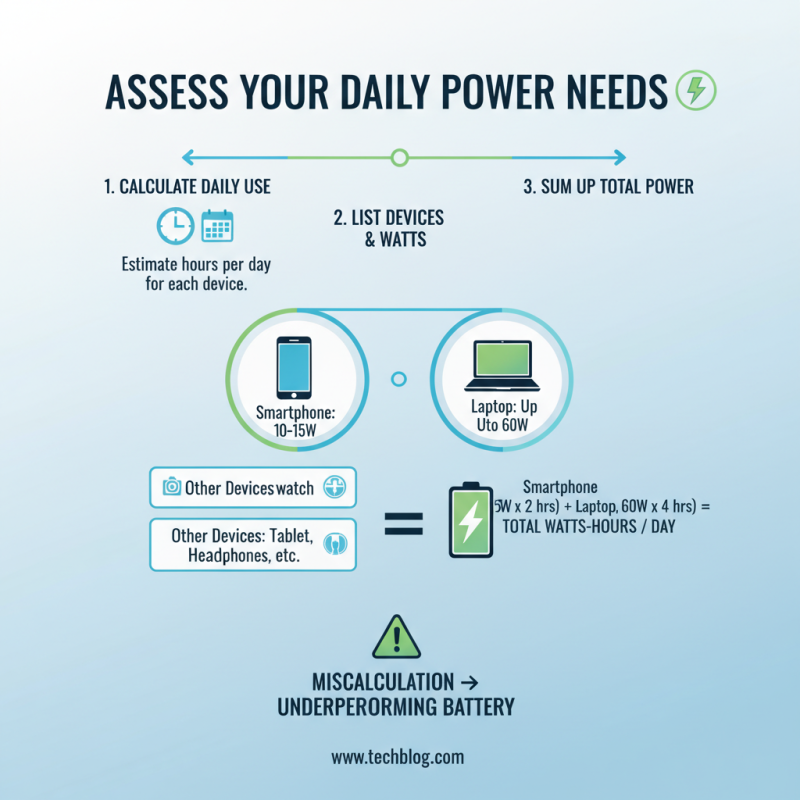
When it comes to assessing your power needs, start by calculating how much energy you use daily. Think about your devices and their energy requirements. For example, a smartphone might need 10-15 watts, while a laptop could require up to 60 watts. Do you often use multiple devices at once? Consider that cumulative power consumption. A miscalculation can lead to selecting an underperforming battery.
Next, evaluate how long you need your battery to last. Is it for a few hours or an entire day? If you prefer longer use, you might need a higher capacity battery. This can be tricky. Sometimes, larger batteries may seem heavy or cumbersome. What will you prioritize—weight or power? Analyze your specific activities. If you find that your use varies, think about a battery with flexible capacity.
Lastly, reflect on your charging habits. Do you charge devices daily or weekly? This may affect your battery choice as well. A short lifespan could lead to frequent replacements, while a battery lasting longer costs more upfront. Balancing these considerations can be challenging but crucial for making the right choice.
Considering Environment and Conditions: Temperature and Storage Factors
When selecting a battery, factors like temperature and storage conditions play a crucial role. Extreme heat can shorten battery life. Cold temperatures can reduce capacity. For example, a battery used in freezing conditions may only hold 50% of its charge. Testing in various weather is often overlooked but essential.
Storage factors are equally important. Batteries should be stored in a cool, dry place. Humidity can lead to corrosion and damage. It’s tempting to leave a battery in a device, but this can drain it unexpectedly. Checking expiration dates is also vital. A battery past its prime may fail when you need it most.
Be mindful of your specific needs. Some applications require long-lasting power, while others need quick bursts of energy. Choosing poorly can lead to frustration. Always consider the environment where the battery will be used. This will improve your experience and ensure reliability. It's not just about the brand; it's about understanding your requirements.
How to Choose the Right Battery for Your Needs
This chart illustrates the performance of different battery types under varying temperature conditions. Understanding how temperature affects battery efficiency can help you make an informed choice based on your needs.
Budgeting for Your Battery: Cost vs. Performance Trade-offs
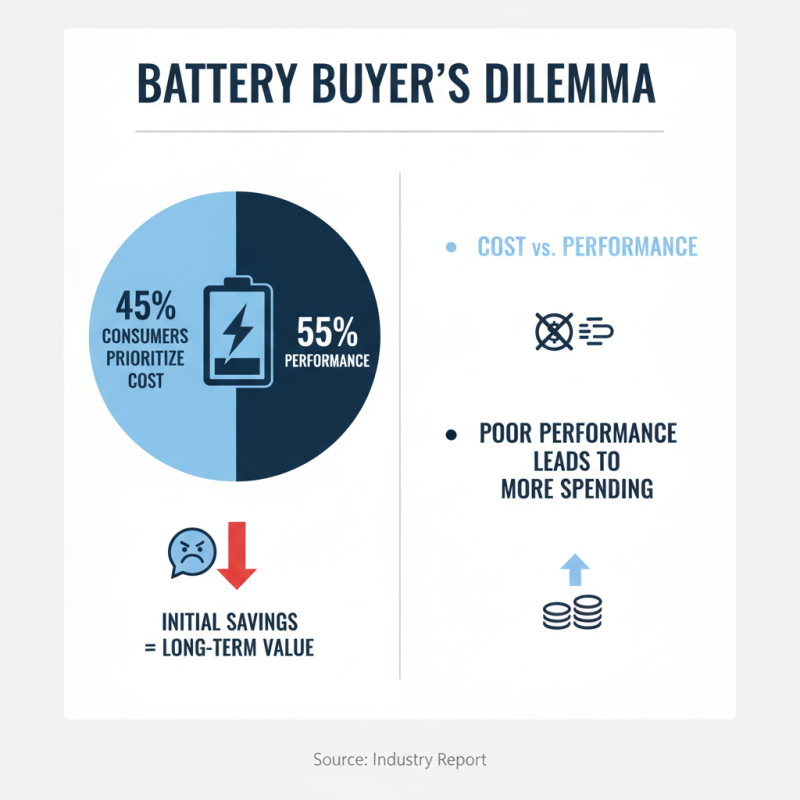
When selecting a battery, cost and performance often clash. A recent industry report highlights that 45% of consumers prioritize cost over performance. This can lead to frustration. If a battery saves you money initially but does not meet performance needs, you'll likely end up spending more.
Consider lithium-ion batteries. They are often more expensive, yet they provide better longevity and efficiency. They can offer up to 3000 charge cycles, compared to just 500 for lead-acid batteries. This difference makes them a more cost-effective choice in the long run. However, some still hesitate. Not everyone can absorb the higher upfront cost despite the long-term savings.
The sweet spot lies in balancing performance with budget. Understanding specific needs is critical. If you're using a battery for short-term, low-drain tasks, a cheaper option might suffice. But, for essential applications like renewable energy storage, investing more upfront could yield better long-term reliability. Scrutinize your needs carefully; your choice will impact performance and overall satisfaction.