
Choosing the right Pvc Shoe Mould has become a production decision, not merely a tooling purchase. World Footwear’s 2024 Yearbook reported approximately 23.9 billion pairs of footwear were produced globally in 2023. Asia remained the dominant manufacturing region. This scale increases pressure on mould accuracy, cycle time, material efficiency, and repeatable quality.
A suitable mould should match the shoe design, PVC formulation, injection machine, and expected production volume. Experienced mould engineers examine cavity balance, shrinkage allowance, cooling channels, venting, and surface texture before approving a design. Small details matter. A blocked vent can create burn marks near the toe. Poor cooling may distort the heel or outsole edge. The wrong steel grade can accelerate wear during long production runs.
Market reports from Grand View Research and Fortune Business Insights continue to show steady growth in footwear demand and manufacturing investment. However, market growth alone does not justify selecting the cheapest tool. Total cost includes maintenance, rejected pairs, changeover time, energy use, and replacement components. Sometimes, a lower quotation becomes expensive later.
The best Pvc Shoe Mould is therefore application-specific. It should support stable filling, clean demoulding, precise dimensions, and practical maintenance access. Buyers should request trial samples, dimensional inspection records, and clear steel and warranty specifications. These documents improve reliability, although they do not replace technical judgment. No mould is perfect. Even a well-designed tool may need adjustment after the first production trial. That reality deserves honest planning.
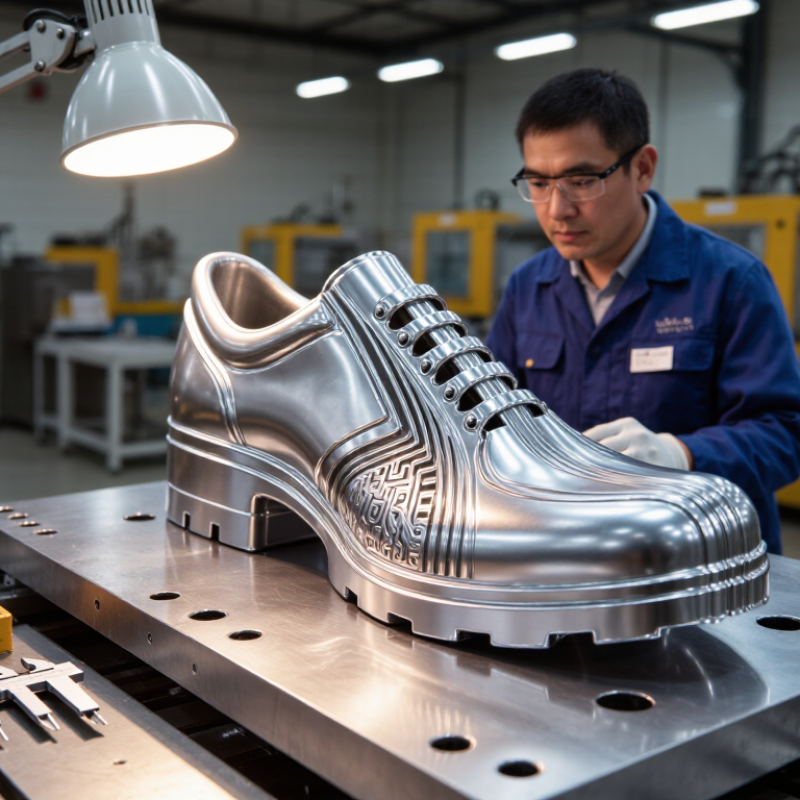
How to Choose the Right PVC Shoe Mould?
Define Your PVC Shoe Mould Requirements
Choosing the right PVC shoe mould starts with a measurable product brief. Define the shoe type, size range, upper thickness, sole geometry, and target weight. Do not write “standard mould.” A workshop needs dimensions, not wishes. Record the PVC grade, hardness, colour, shrinkage allowance, injection temperature, and expected cycle time. PVC density commonly ranges from 1.30 to 1.45 g/cm³, affecting cavity volume and machine loading. The World Footwear Yearbook 2024 reported 23.9 billion pairs were produced globally in 2023, a 6.9% annual increase. That scale rewards repeatable mould design, not attractive samples alone.
Translate production goals into mould features. State cavity count, weight tolerance, parting-line position, vent locations, cooling layout, and ejection method. For flexible PVC, balanced filling and clean venting help reduce burns, voids, and uneven edges. Ask for trial-shot records. Measure weight, dimensions, flash, surface texture, and demoulding force after several cycles. ISO 20457 offers useful guidance for moulded plastic parts, including dimensional tolerances and inspection discipline. Confirm the steel grade, replaceable inserts, polishing level, and maintenance access. These details affect downtime. An imperfect brief is normal. One overlooked detail, such as an untested heel angle, can force costly revisions. Review the first sample critically, even when it looks acceptable. Ask whether the mould remains stable after repeated heating, cooling, and cleaning.
These reference values help define the main requirements before selecting a PVC shoe mould. Confirm the actual shoe last, product geometry, PVC formulation, shrinkage, injection temperature, cavity layout, and cooling system with the mould manufacturer before production.
PVC shoe mould selection depends on material, design, and manufacturing method. In production trials, aluminum moulds often reduce initial costs and shorten machining time. They work well for samples, seasonal designs, and limited production runs. However, aluminum can wear faster under repeated injection pressure. Steel moulds cost more, but they provide stronger surfaces and longer service life. They suit stable designs and high-volume manufacturing.
Design details affect both shoe quality and mould maintenance. Check the sole pattern, wall thickness, draft angle, and parting line carefully. Deep grooves may need EDM machining for cleaner edges. Small vents help release trapped air and prevent burn marks. Cooling channels should follow the thickest sections, where PVC stays hot longer. Poor cooling can create uneven shrinkage and visible deformation. I have seen attractive patterns fail because the heel area cooled too slowly.
Manufacturing method also changes accuracy and flexibility. CNC machining gives reliable dimensions for most mould components. EDM handles narrow textures and difficult corners, but it usually takes more time. Casting can support complex shapes, although surface finishing may require extra correction. Always request a trial mould or sample test before full production. This exposes weak details early. My own first selection was too focused on material cost. I underestimated maintenance access and later needed design changes. A practical comparison should include cycle time, repair options, expected output, and the supplier’s inspection records.
Precision affects every visible part of a PVC shoe, from the sole pattern to the edge definition. Check the mould’s dimensions against approved drawings before production begins. A reliable supplier should provide inspection records and measured samples. Look for even cavities, clean parting lines, and consistent wall thickness. Small errors matter.
Durability depends on steel quality, heat treatment, surface finishing, and maintenance access. The mould should resist repeated pressure, friction, and PVC processing temperatures without losing detail. Ask how many production cycles the mould is designed to support. Examine cooling channels carefully. Poorly placed channels can create hot spots, longer cooling times, and uneven soles. I would also inspect corners and ejector areas, where wear often appears first.
Production efficiency involves more than a short cycle time. A well-designed mould releases shoes smoothly, reduces trimming, and limits material waste. Test the opening action at realistic machine pressure, not only during a clean workshop demonstration. Compare sample cycle times with actual cooling and handling requirements. A faster mould is not always better if it produces frequent defects. In one evaluation, the cavity looked precise, yet minor flashing increased labor noticeably. That result changed the final selection. Allow room for revision; the first design is rarely perfect. Reliable technical communication can prevent expensive changes later.
Choosing the right PVC shoe mould begins with the supplier, not the lowest quotation. Ask how many similar soles they have developed and which production problems they solved. An experienced team studies flex zones, wall thickness, and expected daily output. They should explain PVC flow, shrinkage, venting, and cooling clearly. Request drawings, tolerance records, and trial reports from comparable projects. Real evidence matters more than polished promises. A polished sample can mislead.
Quality control should be visible at each stage. Check the steel specification, cavity machining, surface texture, and movable-part alignment. During sampling, inspect flash around the sole edge, uneven gloss, trapped air, and dimensional changes after cooling. A reliable supplier records temperatures, injection pressure, cycle time, and inspection results. Ask for repeatability data, not one successful sample. Measure it twice. If the supplier cannot explain corrective action, future repairs may become expensive and slow.
Customization requires more than changing a color or adding a logo. Discuss tread depth, heel geometry, texture, demoulding angles, and replaceable inserts. Share the actual PVC grade and machine conditions whenever possible. A mould designed without production data may fit the drawing but fail on the factory floor. Keep revision numbers on every drawing and approve a documented pre-production sample. Do not ignore small doubts. Even a tested mould may need minor venting or polishing changes after launch. Include that possibility in the schedule and budget.
| Evaluation Dimension | What to Check | Practical Evidence to Request | Recommended Weight | Selection Benchmark |
|---|---|---|---|---|
| Relevant Moulding Experience | Experience with PVC footwear, including sandals, boots, slippers, or injection-moulded soles. | Project portfolio, process descriptions, sample moulds, and references for similar product structures. | 20% | At least 3 comparable projects with documented production results. |
| Product and Technical Understanding | Ability to interpret 2D drawings, 3D files, size grading, parting lines, draft angles, and shrinkage requirements. | Design-for-manufacturing review, mould-flow discussion, and a written list of design risks before quotation. | 15% | Supplier identifies potential filling, demoulding, flash, and deformation risks in advance. |
| Mould Material Selection | Suitability of steel or aluminium for the expected production volume, surface finish, corrosion resistance, and maintenance needs. | Material grade proposal, hardness or treatment information, and explanation of why the material matches the order quantity. | 10% | Material choice is linked to production volume, PVC formulation, cycle requirements, and service conditions. |
| Dimensional Accuracy | Control of cavity dimensions, sole thickness, logo placement, tread geometry, and alignment between mould components. | Inspection report using calibrated measuring equipment, dimensional tolerances, and first-sample comparison data. | 15% | Critical dimensions are measured against approved drawings or a signed golden sample. |
| Surface Finish and Appearance | Consistency of texture, polish, engraving, grain, colour separation, and visible parting-line quality. | Approved surface master, texture sample, close-up photographs, and visual inspection criteria. | 10% | Appearance standards are defined in writing and checked under consistent lighting conditions. |
| Process Quality Control | Control of machining, EDM, wire cutting, assembly, venting, cooling, trial runs, and corrective actions. | Quality-control plan, inspection checkpoints, equipment list, trial-mould report, and nonconformity records. | 15% | Quality checks cover incoming materials, machining, assembly, trial samples, and final release. |
| Customization Capability | Ability to adapt the mould to different sizes, tread patterns, logos, colours, materials, cavities, and production machines. | Technical proposal showing cavity layout, interchangeable inserts, logo treatment, size range, and machine compatibility. | 10% | Custom features are clearly separated into confirmed requirements, assumptions, and optional upgrades. |
| Prototype and Sampling Support | Speed and clarity of design approval, prototype production, sample testing, and revision management. | Sample schedule, approval procedure, revision log, sample inspection sheet, and clearly defined approval milestones. | 5% | No production release occurs before documented sample approval and revision confirmation. |
| Maintenance and After-Sales Support | Availability of spare parts, mould-cleaning guidance, repair procedures, storage instructions, and technical response. | Maintenance manual, recommended cleaning method, spare-part list, warranty terms, and response-time commitment. | 5% | The supplier provides written maintenance instructions and a defined process for handling defects. |
| Commercial and Delivery Control | Transparency of quotation, tooling scope, lead time, payment milestones, packaging, and change-control conditions. | Itemized quotation, project timeline, acceptance criteria, change-order procedure, and delivery documentation. | 5% | Price and lead time include all agreed tooling components, sampling stages, and acceptance requirements. |
Choosing the right PVC shoe mould begins with total cost, not the lowest quotation. Ask for a detailed breakdown covering steel, machining, testing, spare parts, and delivery. A cheaper mould may require more manual finishing or produce uneven soles. That difference can become expensive after several production cycles. Request sample pairs and inspect edges, tread depth, weight, and release performance. Real factory experience matters here.
Maintenance should be priced before approval. Check whether cooling channels are accessible and whether worn inserts can be replaced separately. A mould that needs complete rebuilding after minor damage can interrupt production and raise labor costs. Keep records of cycle counts, cleaning dates, defects, and repair expenses. These records help estimate long-term value instead of relying on optimistic promises. Still, calculations are imperfect. Unexpected PVC formulas, rushed changeovers, and operator habits can alter results.
Tips: Compare cost per usable pair, not cost per mould. Include downtime, electricity, maintenance labor, rejected products, and storage. Test the mould under normal factory conditions. Ask an experienced technician to review the design. Choose replaceable wear parts when possible. Leave room for error. A reliable mould should remain stable, serviceable, and economical as orders change.
Northeast Battery, a Stored Energy Holdings, Inc. Company