We can help!
800-441-8824

Top Battery Distributors for Global Buyers?
Choosing a top battery distributor now requires more than comparing prices or warehouse locations. Global buyers need dependable stock, traceable cells, technical documentation, and responsive after-sales support. The right battery distributor should also explain chemistry, cycle life, temperature limits, transport requirements, and warranty conditions clearly.
Demand is moving quickly. The International Energy Agency reported that global electric-car sales approached 14 million units in 2023. Electric-vehicle battery demand exceeded 750 GWh during the same year. BloombergNEF’s 2024 Battery Price Survey recorded an average lithium-ion pack price of $115 per kWh. Prices are falling. Quality risks have not disappeared.
Fatih Birol, Executive Director of the IEA, said, “The electric car market is experiencing exponential growth as consumers increasingly seek out cost savings and environmental benefits.” His observation also affects distributors. They must manage faster product cycles, changing chemistries, and uneven regional demand. A distributor serving solar installers may need different inventory than one supplying electric buses or industrial equipment.
The strongest suppliers show evidence, not confident promises. Look for batch traceability, manufacturer authorization, safety test records, and transparent warranty terms. Ask where products are stored. Ask how damaged units are handled. Small details matter.
The market is not perfectly clean. Some rankings rely on limited public data. A large catalog can hide weak support. A low quotation can conceal long lead times, unclear specifications, or inconsistent cells. This guide compares leading battery distributors through measurable criteria, including product range, geographic reach, technical competence, reliability, and buyer experience. It also recognizes an uncomfortable truth: no distributor is ideal for every application.
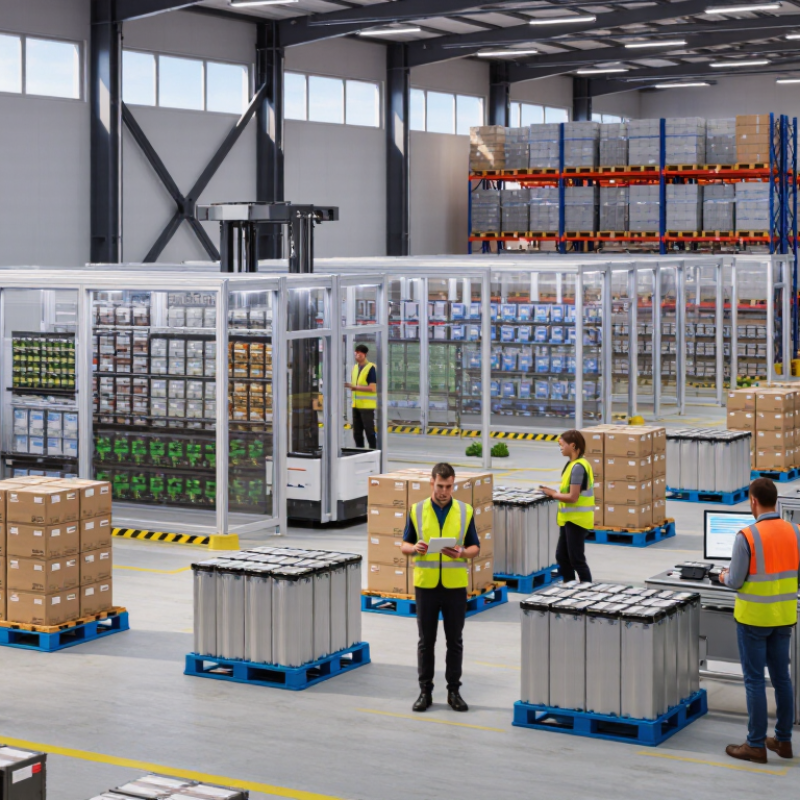
Table of Contents
[Hide]
Defining Battery Distributors and Their Role in Global Supply Chains
A battery distributor connects manufacturers with industrial buyers across borders. Unlike a simple reseller, the distributor manages sourcing, warehousing, documentation, and delivery planning. This role becomes important when buyers need dependable supply without negotiating with multiple factories. A capable distributor can match battery chemistry, voltage, capacity, dimensions, and operating temperature to a specific application.
In global supply chains, distributors often hold inventory near major transport hubs. A buyer may receive cartons from a regional warehouse instead of waiting for ocean freight from another continent. Distributors also check batch records, safety data sheets, test reports, and packaging details before shipment. They may coordinate customs documents and provide practical guidance on storage conditions. Small details matter. A damaged label can delay a container.
Experienced distributors usually understand application risks, not only product prices. They can discuss cycle life, discharge limits, charging conditions, and expected service intervals. However, their forecasts are not perfect. Stock can become outdated, and urgent demand can expose weak planning. Buyers should ask about traceability, inspection procedures, inventory age, lead times, warranty handling, and communication during disruptions. A careful distributor answers with records rather than broad promises. Personal experience shows that clear specifications prevent more problems than fast quotations. Yet even a well-managed supply chain needs review, because transport conditions, demand patterns, and technical requirements can change quickly.
Top Battery Distributors for Global Buyers? – Defining Battery Distributors and Their Role in Global Supply Chains
| Distributor Dimension | Typical Data or Classification | Role in the Global Supply Chain | Buyer Relevance | Common Verification Points |
|---|---|---|---|---|
| Distributor Type | Authorized channel distributor, independent distributor, value-added distributor, or regional stockist | Moves batteries from producers or importers to downstream buyers and may provide local inventory and technical support. | Determines product traceability, warranty handling, availability, and regional support. | Authorization status, supply agreements, warranty process, warehouse locations, and customer references. |
| Primary Battery Chemistry | Lithium-ion, lithium iron phosphate, nickel-metal hydride, lead-acid, nickel-cadmium, or primary lithium | Matches energy density, cycle life, safety characteristics, operating temperature, and cost with the end application. | Chemistry affects system design, transport classification, charging requirements, service life, and recycling obligations. | Safety data sheets, technical datasheets, cell or battery configuration, rated capacity, nominal voltage, and test reports. |
| Product Form | Cells, modules, battery packs, starter batteries, stationary batteries, or complete battery systems | Allows buyers to source either standard components or application-ready assemblies. | Higher integration levels can reduce design work but may limit customization and increase qualification requirements. | Dimensions, terminal layout, communication interface, enclosure rating, thermal management, and integration documentation. |
| Typical End Markets | Electric mobility, telecommunications backup, uninterruptible power, renewable-energy storage, industrial equipment, medical equipment, and consumer electronics | Distributors segment inventory and technical services according to application-specific performance and safety needs. | Application experience can reduce compatibility risks and shorten procurement cycles. | Relevant application references, product qualification records, installation guidance, and after-sales support capability. |
| Core Supply-Chain Services | Demand planning, regional warehousing, order consolidation, kitting, labeling, technical support, and reverse logistics | Reduces lead-time uncertainty and simplifies purchasing across multiple countries or production sites. | Useful for buyers managing variable demand, multiple stock-keeping units, or just-in-time production. | Inventory visibility, order minimums, replenishment policy, delivery performance, and return procedures. |
| International Transport Compliance | UN 38.3 testing for applicable lithium cells and batteries; air, sea, road, and rail rules may also apply | Supports lawful classification, packaging, documentation, and shipment handling for regulated battery products. | Incorrect transport documentation can cause delays, rejected shipments, fines, or safety incidents. | UN 38.3 test summary, transport classification, packaging instructions, dangerous-goods documents, and trained personnel. |
| Relevant Standards | IEC 62133-2 for portable sealed secondary cells and batteries; UL 1642 for lithium cells; UL 1973 for stationary batteries; ISO 9001 for quality management | Provides a framework for assessing product safety, quality systems, and application suitability. | Standards must be matched to the product type, destination market, and intended use; no single standard covers every application. | Valid certificates, test scope, issuing laboratory, model number, revision date, and certificate-holder details. |
| Regional Regulatory Coverage | Requirements may include the EU Battery Regulation, United States transport rules, ADR for European road transport, IMDG Code for sea transport, and IATA Dangerous Goods Regulations for air transport | Helps buyers manage differences in product, labeling, environmental, and transport requirements between markets. | Regional compliance expertise is especially important for cross-border shipments and battery imports. | Destination-specific compliance matrix, labeling samples, importer responsibilities, and environmental reporting procedures. |
| Quality and Traceability | Batch identification, manufacturing date, state-of-health records, incoming inspection, and first-in-first-out inventory control | Maintains product consistency and helps identify affected inventory if a quality issue occurs. | Traceability is critical for warranty claims, field service, recalls, and safety investigations. | Lot numbers, inspection records, storage history, shelf-life policy, and recall communication process. |
| Storage Requirements | Controlled temperature and humidity, protection from short circuits, suitable separation, and charge-state management according to supplier instructions | Preserves battery performance and reduces the risk of damage, degradation, or thermal events during storage. | Warehouse conditions can affect usable capacity, shelf life, and total cost of ownership. | Warehouse safety procedures, fire protection, temperature monitoring, quarantine area, and emergency response plan. |
| Commercial Model | Spot purchase, scheduled replenishment, framework agreement, vendor-managed inventory, or project-based supply | Aligns procurement with production schedules, demand volatility, and inventory ownership arrangements. | Contract structure influences price stability, minimum order quantity, working capital, and supply continuity. | Lead time, minimum order quantity, payment terms, allocation policy, forecast requirements, and service-level commitments. |
| Technical Support Level | Basic product information; Intermediate selection support; Advanced pack design and system integration | Helps buyers select compatible batteries and resolve installation, charging, monitoring, or replacement issues. | Advanced support is valuable for customized packs, battery-management systems, and energy-storage projects. | Engineering staff, application notes, sample availability, firmware or communication support, and response time. |
| Sustainability and End-of-Life | Collection, transport to authorized recyclers, material recovery, take-back programs, and battery passport or reporting support where required | Supports responsible handling after use and helps buyers meet environmental and producer-responsibility obligations. | End-of-life services can reduce compliance risk and improve lifecycle cost visibility. | Recycler authorization, chain-of-custody records, recycling certificates, recovery data, and regional take-back coverage. |
| Key Selection Metrics | Availability, lead time, total landed cost, compliance capability, product range, technical support, warranty, and supply continuity | Provides a balanced basis for comparing distributors beyond unit price alone. | Reliable distributors can reduce production interruptions, compliance exposure, and replacement costs. | On-time delivery data, defect rate, fill rate, total landed cost, warranty resolution time, and business-continuity planning. |