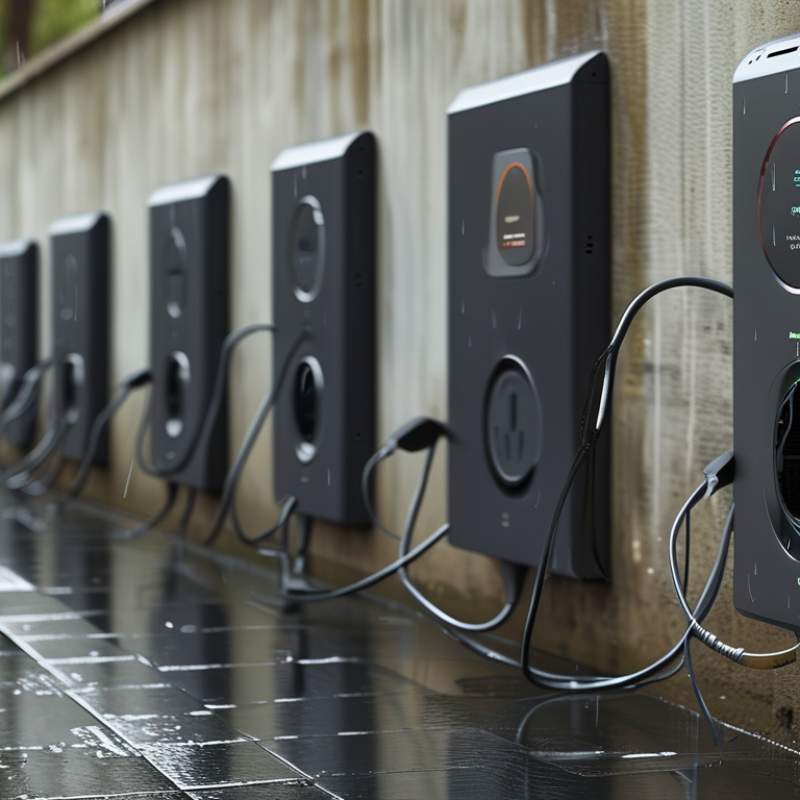
| Product definition | A wall-mounted AC electric-vehicle supply equipment unit that delivers electricity from a building circuit to an EV. | It provides a practical charging solution for homes, workplaces, apartments, hotels, and commercial parking areas. | Confirm whether the product is a complete EVSE unit or only a cable, socket, or control module. |
| Charging type | AC Level 2 / Mode 3 charging is the most common category for wall box installations. | AC wall boxes are generally more suitable for overnight, workplace, and long-dwell charging than high-power DC chargers. | Request charging-mode documentation and confirm compatibility with the target vehicle market. |
| Rated power range | Common residential and light-commercial ratings range from approximately 3.7 kW to 22 kW. | The available power determines charging speed and affects circuit design, installation cost, and site capacity. | Match the output rating with local grid capacity, vehicle onboard-charger limits, and electrical regulations. |
| Electrical input | Single-phase input is commonly used for lower-power installations; three-phase input supports higher ratings such as 11 kW or 22 kW in compatible markets. | Electrical systems differ by country, building type, voltage, frequency, and phase availability. | Verify nominal voltage, frequency, phase configuration, current rating, and neutral or earth requirements. |
| Connector and cable options | Common AC interfaces include Type 1, Type 2, and regional socket variants; tethered and socketed designs are available. | Connector selection must reflect vehicle fleets and regulatory requirements in the destination market. | Specify connector type, cable length, cable temperature rating, locking method, and replacement availability. |
| Communication features | Basic models may operate offline; connected models can use Wi-Fi, Ethernet, Bluetooth, cellular connectivity, or OCPP-based backend communication. | Connectivity enables monitoring, access control, remote diagnostics, firmware updates, and usage reporting. | Check supported protocols, cybersecurity controls, API access, SIM requirements, and software ownership terms. |
| Load management | Available functions may include dynamic load balancing, scheduled charging, solar integration, and multi-charger power sharing. | Load management can reduce peak demand and help avoid costly electrical upgrades at constrained sites. | Ask for control logic, measurement accuracy, response time, and compatibility with energy-management systems. |
| Protection and safety | Typical functions include overcurrent, overvoltage, residual-current, over-temperature, surge, short-circuit, and protective-earth monitoring. | Protection features reduce electrical and operational risks for users, vehicles, buildings, and installation personnel. | Review the protection specification, test method, trip thresholds, reset behavior, and installation instructions. |
| Ingress protection | Outdoor wall boxes are commonly offered with ratings such as IP54, IP55, or IP65, depending on product design and certification. | Higher environmental protection is important for rain, dust, temperature changes, and exposed parking locations. | Confirm the certified rating applies to the complete installed product, including cable entry and socket covers. |
| Operating environment | Many products are designed for outdoor and indoor use across a broad temperature range, commonly around -30°C to +50°C, subject to derating. | Climate conditions can affect charging power, enclosure durability, display performance, and long-term reliability. | Request the tested temperature range, humidity limits, altitude limits, UV resistance, and power derating curve. |
| User authorization | Possible methods include plug-and-charge, RFID cards, PIN access, mobile applications, and backend authorization. | Different sites require different access models, from private home use to shared commercial charging. | Confirm offline authorization, user limits, data privacy, card standards, and administrator controls. |
| Metering and billing | Some units include energy metering, while commercial models may support certified meters and transaction records. | Accurate energy data is necessary for tenant reimbursement, fleet accounting, and public or workplace billing. | Check meter accuracy class, certification requirements, data export, tariff support, and audit trails. |
| Compliance documentation | Relevant requirements may include IEC 61851, IEC 62196, IEC 60364-7-722, regional electrical rules, EMC requirements, and product safety legislation. | Compliance evidence supports customs clearance, installation approval, insurance, tender participation, and market access. | Request declarations, test reports, certificates, user manuals, wiring diagrams, and destination-market approvals. |
| Installation requirements | Installation normally requires a suitable protective device, correctly sized conductors, proper earthing, and qualified electrical work. | Installation conditions influence total cost, commissioning time, safety, and warranty validity. | Obtain mounting drawings, cable specifications, breaker guidance, commissioning procedures, and installer training materials. |
| Warranty and after-sales support | Commercial warranty periods commonly range from one to several years, depending on the supplier and contract. | Long-term support is essential for distributed installations and reduces downtime-related costs. | Evaluate warranty scope, spare-parts availability, response times, repair locations, software support, and RMA procedures. |
| Supply and customization capability | Potential options include private labeling, enclosure color, cable configuration, firmware settings, packaging, and regional plug or connector variants. | Flexible supply capability helps buyers meet local regulations, fleet requirements, deployment standards, and project branding rules without relying on brand-specific data. | Confirm minimum order quantity, production capacity, lead time, sample policy, change-control process, and continuity-of-supply plan. |